
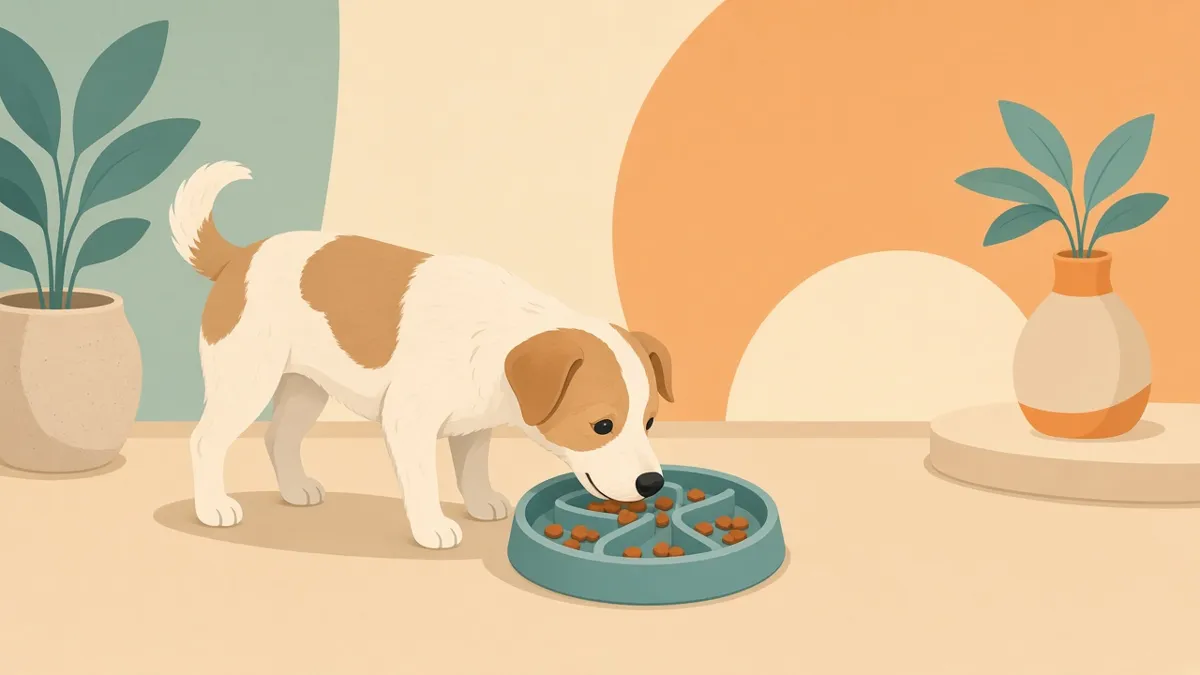
A slow-feeder bowl can make meals last longer for a dog that gulps its food. Choose a design that is easy to wash and a size that suits your dog's muzzle, and stop using it if your dog gets frustrated.
This page contains affiliate links. We earn a commission if you buy through links on this page, at no extra cost to you. As an Amazon Associate I earn from qualifying purchases.
Quick pick
- Simple option: a silicone slow-feeder bowl (the Bifeaw single bowl in the first card below).
- Branded plastic-style option: the Outward Hound Fun Feeder Slo Bowl in the second card.
- Not sure? Start with the shape guide below, and check the size, material and cleaning notes on each Amazon listing, because we have not verified them.
Comparison at a glance
We have not verified product-level specifications for these two listings, so this table compares the types of design and what to check on each page rather than quoting figures.
| Feature | Bifeaw silicone slow feeder | Outward Hound Fun Feeder Slo Bowl |
|---|---|---|
| Product type | Silicone slow-feeder bowl (single bowl) | Slow-feeder bowl with a raised pattern inside |
| Check on the listing | Size, depth, material safety information, cleaning instructions, whether it has a non-slip base | Size options, material, cleaning instructions, whether it has a non-slip base |
| Best matched to | Owners who want a flexible, simple bowl | Owners who want a familiar brand name |
Simple shortlist
Bifeaw Silicone Slow Feeder Dog Bowl (single bowl)
A silicone slow-feeder bowl that adds obstacles to mealtime. Silicone is generally easy to wipe and wash.
Caveat: We have not verified the size, depth or base design, so read the listing details. The design suits some dogs better than others.
Outward Hound Fun Feeder Slo Bowl
A branded slow-feeder bowl with a raised pattern inside to slow down eating.
Caveat: We have not verified the listed size options or materials, so check the Amazon page and choose a size for your dog.
Pros and cons of slow feeders
Pros
- Can stretch out mealtime for dogs that bolt food
- Adds a bit of mental stimulation to feeding
- Often easy to wash, especially smooth silicone or dishwasher-friendly designs
- Inexpensive to try compared with other feeding gear
Cons
- Some dogs get frustrated, or push the bowl around
- Grooves and ridges need a proper scrub or food can build up
- Not suited to every muzzle shape, especially flat-faced dogs, so size and pattern matter
- A slow feeder does not fix an underlying health or behaviour issue
Why dogs eat fast, and what to do first
Dogs gulp food for many reasons: competition with another pet, a habit from puppyhood, or simply enthusiasm. A slow feeder is one tool among several. You can also try splitting meals into smaller portions, feeding in a quiet spot away from other pets, or spreading food on a lick mat or snuffle mat (see our lick mat guide). If your dog suddenly starts eating much faster, or vomits after meals, mention it to your vet.
What to look for
- Obstacle pattern: raised ridges or maze-like shapes make your dog work around the food. Pick a pattern your dog's nose can actually reach into.
- Size and depth: a bowl that is too small makes mealtime awkward, and one that is too large defeats the purpose.
- Material: check the material information and cleaning notes on the listing. Smooth, dishwasher-friendly materials are easiest to keep clean.
- Stable base: a non-slip base keeps the bowl in place, which matters if your dog pushes it around.
- Dog's face shape: short-nosed dogs often find deep, narrow grooves difficult.
What to avoid
- Patterns so complicated that your dog gives up.
- Bowls that tip or slide easily.
- Letting your dog chew the bowl. Replace it if it is cracked or damaged.
- Switching straight to a slow feeder for every meal without watching how your dog copes first.
Simple buying tip
Try the slow feeder with a small meal first and stay nearby. If your dog is happy with it, use it daily. If not, a lick mat or a simple scatter of kibble on a tray can work as an inexpensive alternative.
Frequently asked questions
Are slow feeders suitable for puppies?
Many are used with puppies, but pick a size that suits a small mouth and ask your vet or breeder about feeding amounts. Supervise early meals.
How do I clean a slow feeder?
Follow the cleaning notes on the listing. As a general rule, wash it after every meal so residue does not collect in the grooves.
How we choose
For slow feeders we looked at the type of design, the material and the cleaning information on each listing, and whether the size options suit different dogs. Because we have not verified product-level specifications for these two listings, we have limited this guide to general guidance and what to check on the Amazon page.
This guide is research-based. We have not hands-on tested these products. We compare manufacturer and listing specifications and general guidance, and any pros, cons and picks are the Small Paw Guide editorial team's own assessment, not test results. We do not show prices or customer feedback, so check the current listing before you buy. See how we work and our affiliate disclosure. The review date for this guide is shown under its title.
Final thought
Pick a bowl that is easy to clean and sized for your dog, and watch how they use it for the first week.
Keep reading
- Best Dog Bowls for Messy Eaters in Australia: Bowl and mat setups when meals are messy rather than fast.
- Best Sensitive Stomach Dog Food in Australia: What to Check: Feeding basics if gulping food upsets your dog's stomach.
- Fresh Dog Food vs Kibble in Australia: How the type of food changes portion size and bowl choice.
- Puppy Essentials Checklist Australia: What to Buy First: The basics to buy before specialist feeders.
- Best Lick Mats and Enrichment for Small Dogs in Australia: Lick mats and pots as another way to slow down or stretch out a meal.
More in this topic: gear and setup guides, or browse all guides.