
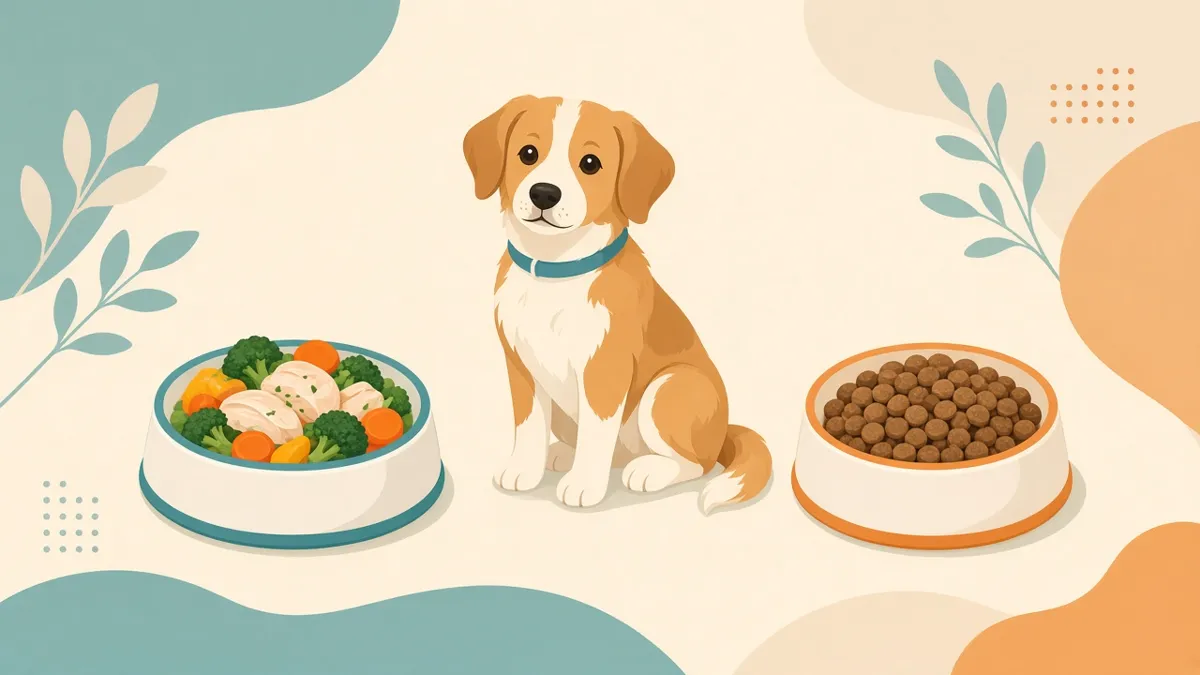
Neither fresh food nor kibble is automatically the better choice. Fresh food usually takes up freezer room and costs more week to week, and you have to remember to thaw it. Kibble sits in the pantry, buys in bulk and packs into a zip-lock bag for a weekend away. Go with the food that is complete and balanced for your dog's life stage and that fits the way your household actually runs. If your dog has a medical condition or ongoing tummy trouble, talk to your vet before changing diet.
Quick pick
- Fresh food suits: owners who want portioned fresh meals and have fridge or freezer space and a budget for the ongoing cost.
- Kibble suits: owners who want food that keeps in the cupboard and buys in bulk, and a routine that still works when your dog travels or goes to boarding.
- Either way: check the label says the food is complete and balanced for your dog's life stage, and switch over gradually. Ask your vet first if your dog has a medical condition.
What actually separates them
Fresh food usually arrives as pre-portioned packs that go straight into the freezer, and you move a day or two's worth into the fridge to thaw. Kibble is dry food that keeps in the bag or a sealed tub on the laundry shelf. Plenty of owners like the idea of a fresh meal in the bowl. Plenty of others like being able to measure out a scoop in the dark at 6 am. Neither type is right for every dog, so we have stuck to the everyday things you can weigh up yourself.
Size plays a part. A 3 kg Chihuahua eats very little, so a box of fresh packs may last a while and take up less freezer room than you expect. A 9 kg mini Cavoodle gets through food faster, and the storage and spend add up quicker.
Side-by-side comparison
This compares the two types in general terms, not individual brands. It makes no claims about how either one affects a dog's health.
| Factor | Fresh food | Kibble |
|---|---|---|
| Storage | Needs refrigeration or freezer space, and thawing time | Cupboard or airtight container |
| Ongoing cost | Usually higher, and depends on the provider and your dog's size | Usually lower, with a wide range between brands |
| Convenience | Pre-portioned packs save measuring, but you need to plan thawing and be home for deliveries | Easy to scoop and buy in bulk |
| Variety | Depends on the provider's menu | Wide range of brands and formulas |
| Travel and boarding | Harder to take away and to hand over to a carer | Easy to pack and measure |
| Small dogs | Small portions can suit a small dog, but check the portion guide for your dog's weight | Some brands offer small-breed formulas and smaller kibble sizes |
| What to check on the label | Complete-and-balanced statement, ingredient list, portion guidance, life stage, storage and thawing instructions | Complete-and-balanced statement, ingredient list, feeding guide, life stage, best-before date |
Pros and cons: fresh food
Pros
- Pre-portioned packs mean no measuring at mealtime
- Some owners prefer the look and feel of fresh meals
- Some fussy eaters may be more interested in fresh meals, though this varies from dog to dog
Cons
- Usually costs more over time than kibble
- Needs fridge or freezer space and some planning
- Harder to travel with or leave with a carer
- Subscription deliveries need to match how fast your dog eats the food
Pros and cons: kibble
Pros
- Usually the lower-cost option, with a wide price range between brands
- Easy to store, measure and buy in bulk
- Packs easily for a weekend away, and is easy to leave with a boarding kennel or pet sitter
Cons
- Quality and ingredients vary a lot between brands, so reading the label matters
- Some owners prefer a fresh-food style
- Large bags can go stale or be wasted if your dog does not take to the food
Questions to ask yourself
- How much fridge and freezer space do I have?
- Does my budget cover the ongoing cost for the life of my dog, not just the first month?
- Will I travel with my dog, or use boarding or a pet sitter?
- Does my dog have a medical condition that needs a particular diet?
- Can I keep to the routine week after week?
- Does the label say the food is complete and balanced for my dog's life stage?
How to switch from one food to another
Most owners change over across about a week, mixing a little more of the new food in every couple of days. The schedule below is a common example, not veterinary advice. Some dogs need longer, and your vet can suggest a plan for yours. For a small dog, kitchen scales make the quarters and halves much easier to get right than eyeballing a few grams.
| Days | Old food | New food |
|---|---|---|
| 1 to 2 | About three quarters | About one quarter |
| 3 to 4 | About half | About half |
| 5 to 6 | About one quarter | About three quarters |
| 7 onward | None | All new food |
- Don't let the total creep up. Follow the feeding guide on the new food's label and adjust with your vet. A cup of kibble and a cup of fresh food are not the same amount of food.
- Keep an eye on appetite and stools. If the poo bags start telling you stools are softer, or your dog seems off, slow the change down. Call your vet if it doesn't settle.
- Change one thing at a time. Hold off on new treats or toppers until the switch is done, so you know what caused any upset.
- Treat fresh food like your own fridge food. Follow the pack's storage and thawing instructions, and stick to the use-by date.
Mixing fresh and dry food
Some owners split the difference, with a spoonful of fresh food on top of the usual kibble or one fresh meal and one dry meal a day. If you do, ask your vet how to portion the two so the daily total suits your dog, and check the combination still adds up to a complete and balanced diet. Small dogs have less margin here, because a little extra each day is a bigger share of what a 4 kg Maltese needs.
Common mistakes
- Switching in one day instead of gradually.
- Feeding the full amount of both foods when mixing, so the total is more than your dog needs.
- Choosing on the packaging or the ads alone, without reading the ingredient list and life-stage statement.
- Signing up for a big fresh-food subscription before you know your dog will eat it, then finding the freezer full of packs.
- Changing foods repeatedly when tummy trouble keeps coming back, instead of speaking to your vet.
- Assuming fresh or kibble is the right choice for every dog because of what works for a friend's dog.
Which should you choose?
Open the freezer and look at how much room is really there, then think about the next six months of your budget. If both point the same way, you have your answer. Whichever you pick, it needs to be complete and balanced for your dog's life stage. If your dog has a medical condition or keeps getting an upset stomach, check with your vet before you change anything. For more on feeding a dog with a touchy tummy, see our sensitive stomach food guide.
Frequently asked questions
Is fresh food better than kibble?
Neither is automatically better. What matters is a complete and balanced food that suits your dog's life stage, and a routine you can keep up. Your vet can help you decide for your individual dog.
Can puppies eat fresh food?
Puppies have specific nutritional needs. Check the label states the food is complete for growth, and ask your vet before choosing a puppy diet.
Can I mix fresh food and kibble?
Some owners do. Ask your vet how to portion the two so the daily total suits your dog.
How long should a food switch take?
About a week is a common starting point, and slower is fine. If your dog's stools soften or appetite changes, slow down and talk to your vet.
When should I speak to a vet?
If your dog has ongoing tummy trouble, vomiting, diarrhoea, weight changes or a medical condition, talk to your vet before changing food. This guide is general information, not veterinary advice, and it does not suggest that any food prevents, treats or cures a condition.
How we choose
For this comparison the Small Paw Guide editorial team looked at everyday factors such as storage, cost and travel, plus what to check on labels. We make no health claims for either type of food. We have not fed or tested any food ourselves, and we do not rank brands. It is general information, not veterinary advice.
This guide is research-based. We have not hands-on tested these products. We compare manufacturer and listing specifications and general guidance, and any pros, cons and picks are the Small Paw Guide editorial team's own assessment, not test results. We do not show prices or customer feedback, so check the current listing before you buy. See how we work and our affiliate disclosure. The review date for this guide is shown under its title.
Keep reading
- Best Sensitive Stomach Dog Food in Australia: What to Check: What to look for if your dog has a sensitive stomach.
- Best Slow Feeders for Fast Eaters in Australia: Slow feeding for dogs that gulp either type of food.
- Best Dog Bowls for Messy Eaters in Australia: Bowls and mats for wet or dry feeding.
- Puppy Essentials Checklist Australia: What to Buy First: Choosing a puppy food as part of the first shop.
More in this topic: food and feeding guides, or browse all guides.