
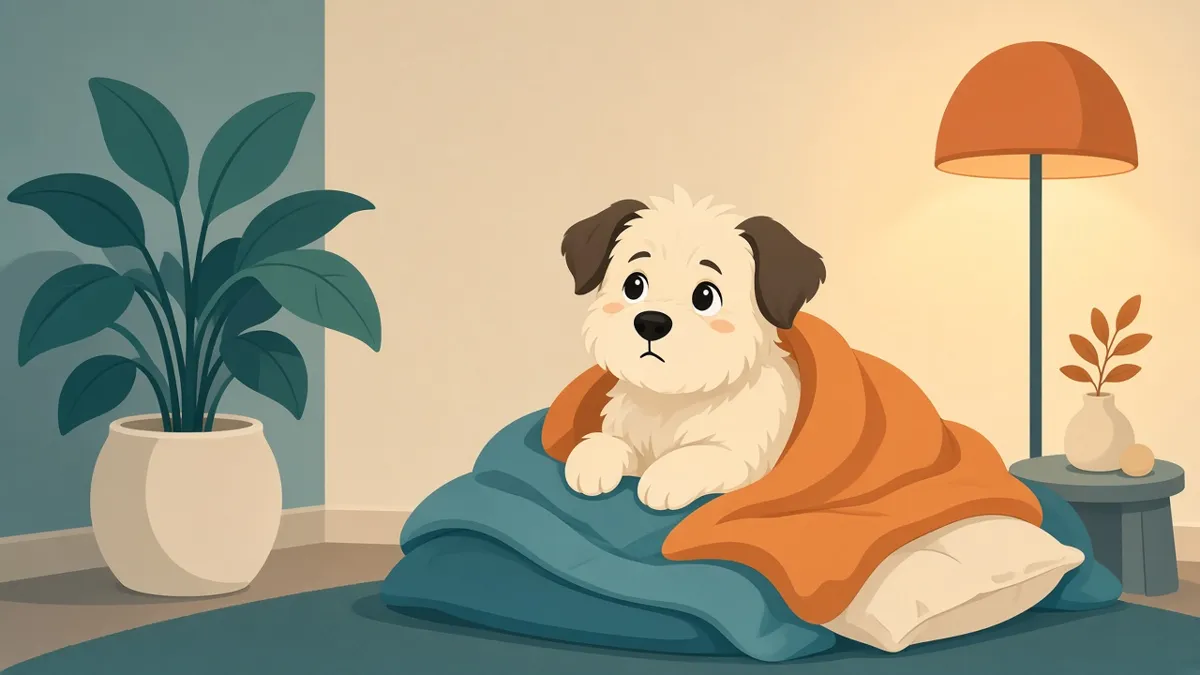
Calming products can support a routine, but they do not replace training or professional advice. Choose one or two simple tools such as a comfortable bed, a lick mat or a chew, and see a vet or trainer if anxiety is severe.
This page contains affiliate links. We earn a commission if you buy through links on this page, at no extra cost to you. As an Amazon Associate I earn from qualifying purchases.
Quick pick
- Comfort: a supportive bed in a quiet spot.
- Occupation: a lick mat or a food-stuffable toy.
- Fireworks coming up: read the fireworks night plan, and talk to your vet early if loud noises have frightened your dog before.
- Important: sudden or severe anxiety needs a vet or qualified trainer, not just a product. The Amazon listings in the shortlist are starting points that we have not verified.
Comparison: common calming aids
This table compares general types of aids, not individual products, and none of them is a treatment.
| Aid | What it offers | Things to consider |
|---|---|---|
| Supportive bed | A defined, comfortable resting spot | Choose a size and cover you can wash |
| Lick mat or enrichment feeder | Something calm to do | Count food as part of daily meals, and supervise |
| Chew toys | An outlet for chewing | Check size and supervise |
| Crate cover or quiet corner | A cosier resting space | Keep ventilation, and introduce gradually |
| Routine and training | Predictability | Usually matters more than any product |
Simple shortlist
Amazon Australia calming product listing
A listing on Amazon Australia to look at when comparing calming aids such as mats, beds and enrichment toys.
Caveat: We have not verified this listing's details or any calming claim. A product is not a substitute for training or veterinary advice, so check the description carefully.
Pros and cons of calming products
Pros
- Can make a routine easier by giving your dog something calm to do
- Inexpensive things like a lick mat are easy to try
- A comfortable bed in a quiet spot is helpful for most dogs
Cons
- Products do not fix the cause of anxiety
- Claims on packaging are not guarantees, so read them critically
- Some items need supervision, and not every dog likes them
Products that can help
- A supportive calming-style bed.
- A lick mat or enrichment feeder.
- Chew toys.
- Crate cover or quiet rest area accessories.
What to remember
- Products do not replace training or professional advice.
- Sudden severe anxiety needs a vet or trainer conversation.
- Choose products that are safe and easy to supervise.
- Simple usually works better than buying ten random things at once.
Signs it is time to talk to a vet or trainer
- Destructive behaviour, house soiling or howling that is new or getting worse.
- Pacing, panting, trembling or refusing food.
- Distress when left alone that does not ease over time.
- Signs of injury from trying to escape.
These can have medical or behavioural causes. A vet can rule out health problems and may refer you to a qualified behaviour professional.
Fireworks nights: New Year's Eve and 26 January
New Year's Eve and Australia Day fireworks are on the calendar weeks ahead, so you have time to prepare. Summer storms give less warning, but the same setup helps. The RSPCA Knowledgebase page on pets and fireworks is worth reading in full. Here is what it covers, in plain terms:
- Talk to your vet early. If loud noises have upset your dog before, book in well before the night. Your vet can discuss options that no product on this page offers.
- Walk earlier. Get the walk done before dark, then give dinner a couple of hours later.
- Keep your dog inside with you. Shut the windows and blinds, and put the TV or some music on.
- Set up a hiding spot. A covered crate or a box with blankets in a quiet room works. Let your dog go in when they want to, and don't pull them out.
- Never tie your dog up. A panicking dog can hurt itself on a lead or collar.
- Check the microchip and ID tag. Make sure the register has your current phone number before the night.
Some dogs will work on a lick mat or a stuffed chew while it's loud. Others won't touch food when they're frightened, and that's fine. Don't push it. A product is a small extra on the night, not the plan.
A simple calming routine
- Give your dog a regular walk and mealtime schedule.
- Set up a quiet resting spot with a comfortable bed.
- Offer a lick mat or chew before you leave or when things get busy.
- Reward calm behaviour rather than fuss at departures and arrivals.
- Introduce new items one at a time so you can see what helps.
Everyday care such as nail trims can be stressful for some dogs. Our nail clippers and grinders guide has a few general ideas for getting a nervous dog used to paw handling.
Frequently asked questions
Do calming products work for every dog?
No. Dogs respond differently, and products are only one part of the picture.
Is a lick mat safe?
Many owners use them, but supervise and follow the product directions. Ask your vet if your dog has dietary restrictions. Our lick mat guide covers sizes, hygiene and safe use in more detail.
Will a calming product stop my dog being scared of fireworks?
No product can promise that. A quiet hiding spot and something to chew may help some dogs settle. A dog that panics at loud noises needs a plan made with your vet, ideally weeks before New Year's Eve.
How we choose
For calming products we looked at what each type of aid offers, the safety considerations, and how clearly claims are worded. Because we have not verified product-level specifications for the Amazon listing here, the guide is general. It is general information, not veterinary or behavioural advice.
This guide is research-based. We have not hands-on tested these products. We compare manufacturer and listing specifications and general guidance, and any pros, cons and picks are the Small Paw Guide editorial team's own assessment, not test results. We do not show prices or customer feedback, so check the current listing before you buy. See how we work and our affiliate disclosure. The review date for this guide is shown under its title.
Final thought
Buy one or two calming tools that match your dog's routine, then see what actually gets used. Rest, routine and consistency matter more than gimmicks.
Keep reading
- Best Dog Beds for Small Dogs in Australia: A comfortable bed is the simplest settling aid.
- Best Dog Crates for Small Dogs in Australian Apartments: A crate as a quiet retreat.
- Best Puppy Toys for Chewing in Australia: Chew toys for decompression.
- Best Slow Feeders for Fast Eaters in Australia: Slow feeders as enrichment at mealtimes.
- Best Lick Mats and Enrichment for Small Dogs in Australia: A closer look at lick mats and pots, with safe-use tips.
- Best Nail Clippers and Grinders for Small Dogs in Australia: Getting a nervous dog used to paw handling, clippers and grinders.
More in this topic: care and grooming guides, or browse all guides.