
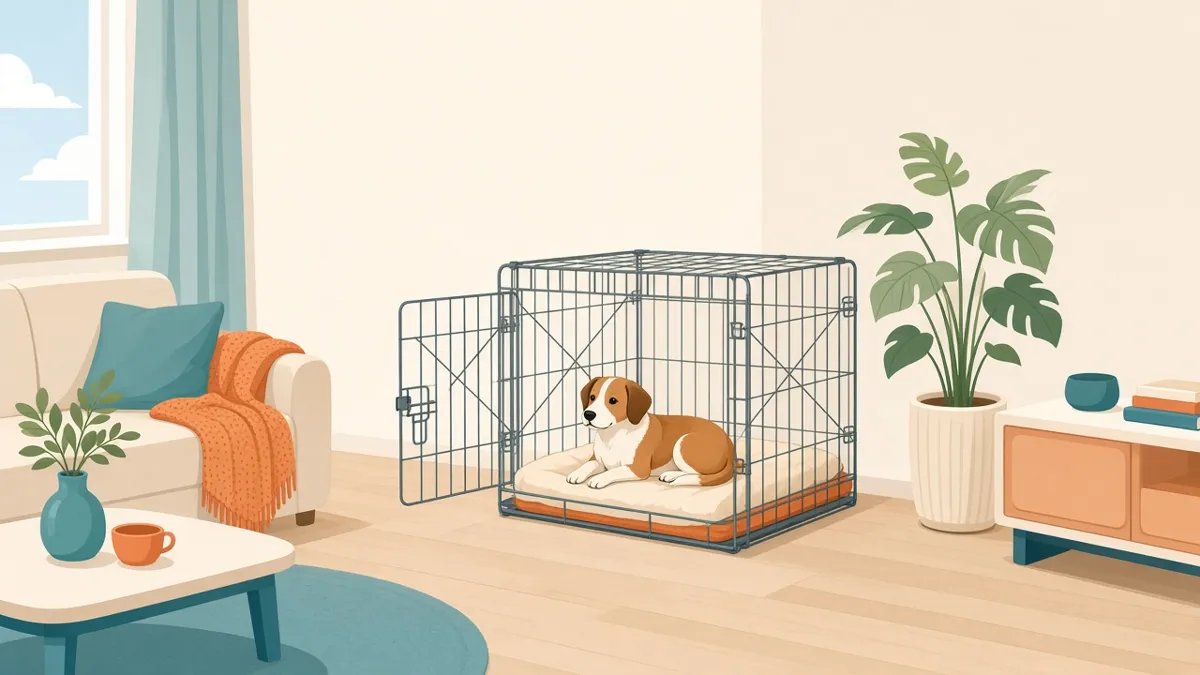
For a small dog in a unit or apartment, a folding wire crate usually makes the most sense. It folds flat when you need the floor back, and the open sides let air through on a hot night. Measure your dog first, then measure the corner the crate will live in.
This page contains affiliate links. We earn a commission if you buy through links on this page, at no extra cost to you. As an Amazon Associate I earn from qualifying purchases.
Quick pick
- Space-saving: most unit owners end up with a folding wire crate. Folded, it slides behind a door or under the bed.
- Size rule: your dog should be able to stand without ducking, turn in a full circle and stretch out on their side. The sizing steps take five minutes with a tape measure.
- Check first: the Amazon listing in the shortlist is a starting point, not a verified pick. We have not verified its dimensions, so read the internal measurements on the page before you order.
Comparison: common crate types
These are general crate styles, not individual products.
| Crate type | Good for | Trade-offs |
|---|---|---|
| Folding wire crate | Units and apartments. It folds flat, lets air through and usually has a slide-out tray | Looks a bit industrial in a lounge room, and some dogs settle better with more cover |
| Soft-sided crate | Carrying to the car or a friend's place | A chewer or scratcher can get through the mesh, and accidents soak into the fabric |
| Plastic travel crate | Car trips, flights and dogs that like a snug den | It stays full size, so you need somewhere to keep it between trips |
| Furniture-style crate | Sitting in a living room without looking like a crate | Usually heavy, and a timber base is harder to clean after an accident |
Where to start
MidWest Ovation Single Door Dog Crate, 24-inch
A 24-inch single-door folding wire crate. It works as a reference point when you compare tray design and how the panels fold.
Caveat: We have not verified this crate's dimensions, weight or construction independently. A 24-inch crate is roughly 61 cm long, so it suits toy and small breeds only. Check the measurements and assembly details on the Amazon page against your dog and your space.
Pros and cons of using a crate
Pros
- A spot that is clearly theirs, if the crate is introduced kindly
- Helps with toilet training and settling while you are out
- Folds away when you need the floor space back
- Makes car trips and vet visits less of a scramble
Cons
- Some dogs never warm to a crate, and every dog needs a slow, positive start
- It is not for long stretches of confinement, and never for punishment
- Takes a real chunk of floor in a one-bedroom unit
- Get the size wrong in either direction and it is much less useful
How to size a crate
- Stand your dog on a flat floor and measure up to the top of the head, or to the ear tips if they sit higher. A Chihuahua with upright ears can need a few extra centimetres here.
- Measure from the nose to where the tail starts. Leave the tail itself out.
- Add a few centimetres to both numbers. As a rough guide, a 24-inch crate (about 61 cm long) suits many Maltese and Chihuahuas, while a mini Cavoodle often needs a 30-inch (about 76 cm). Your tape measure beats any breed chart.
- For a puppy, ask your breeder or vet what adult size to expect. A Cavoodle can finish anywhere from about 5 kg to well over 10 kg depending on the poodle parent. Some crates come with a divider panel you move back as the puppy grows, so check whether this listing includes one.
Got your two numbers? Compare them with the internal measurements on the listing, not the outside size in the title.
What to look for
- Room to stand, turn and lie flat, based on the measurements above.
- A fold-flat design if the crate has to share the room with you.
- A plastic tray that slides out, so you can rinse it in the laundry tub or the shower.
- Doors that latch firmly, with no sharp wire ends where a paw or collar could catch.
- A weight you can lift on your own if it will move between rooms or into the car.
Setting it up in a unit or apartment
- Pick a corner where your dog can see you without being stepped around. Beside the couch often works better than a hallway.
- Keep it out of the afternoon sun. A crate next to a glass sliding door or a west-facing window warms up quickly in an Australian summer.
- Add a bed or crate mat that covers the floor without bunching up at the edges.
- A breathable cover over the back and sides can help a dog that likes a den. Leave the front and at least one side open, especially in summer.
- On floorboards or vinyl, a rubber-backed mat underneath (Bunnings sells matting by the metre) stops the tray sliding and scratching.
- Don't buy bigger than you need. In a one-bedroom unit, an oversized crate becomes furniture you walk around every day.
- If you share walls, expect some whining in the first week or so. Short, gradual sessions usually settle it faster than long ones.
Introducing the crate
For the first few days, leave the door open and let your dog wander in and out. Toss a treat to the back, or keep a favourite chew for crate time only. Then close the door for a minute while you sit nearby, and build up from there. If your dog pants, scrabbles at the door or panics, stop and ask a qualified trainer or your vet for help rather than pushing on.
Frequently asked questions
How long can a dog stay in a crate?
It depends on the dog and their age. A young puppy needs toilet breaks often through the day, and no dog should spend long stretches in a crate as a regular thing. Your vet or a trainer can give you a guide for your dog.
Is a crate right for every dog?
No. Some dogs find a crate stressful however slowly you go. A puppy pen or a puppy-proofed laundry can do a similar job, and a trainer can help you work out which suits your dog.
Can I use a crate in the car or in hot weather?
Check the airflow and keep the crate out of direct sun, whether it's in the lounge room or the back of the car. Our car travel guide and cooling mat guide cover the basics. Never leave a dog in a parked car, even with the windows down.
How we choose
For crates we looked at sizing guidance, whether a crate folds, tray and door design, and how each style works in a small space. We have not verified product-level specifications for the listing here, so this guide sticks to general advice and tells you which measurements to check yourself.
This guide is research-based. We have not hands-on tested these products. We compare manufacturer and listing specifications and general guidance, and any pros, cons and picks are the Small Paw Guide editorial team's own assessment, not test results. We do not show prices or customer feedback, so check the current listing before you buy. See how we work and our affiliate disclosure. The review date for this guide is shown under its title.
The short version
Measure twice and buy the size that fits. A plain folding crate that suits your dog and your floor will get more use than a big or fancy one you resent stepping around.
Keep reading
- Best Indoor Dog Toilets and Puppy Pads for Australian Apartments: Indoor toilet options for apartments and small spaces.
- Best Dog Beds for Small Dogs in Australia: Choosing a bed or mat that fits inside the crate.
- Best Calming Products for Anxious Dogs: Fireworks Night Plan: Helping a dog settle in a crate or quiet corner.
- Puppy Essentials Checklist Australia: What to Buy First: The wider new-puppy shopping list.
- Best Puppy Toys for Chewing in Australia: Safe chew options for crate time.
- Best Cooling Mats for Small Dogs in Australian Summer: Hot-weather comfort and airflow for a rest spot.
- Best Car Seats and Travel Boosters for Small Dogs in Australia (and Car Travel Basics): Travelling with a small dog in the car.
- Best Puppy Playpens for Small Dogs in Australia: Joining a crate to a playpen so a puppy has room to play and a toilet spot.
More in this topic: gear and setup guides, or browse all guides.