
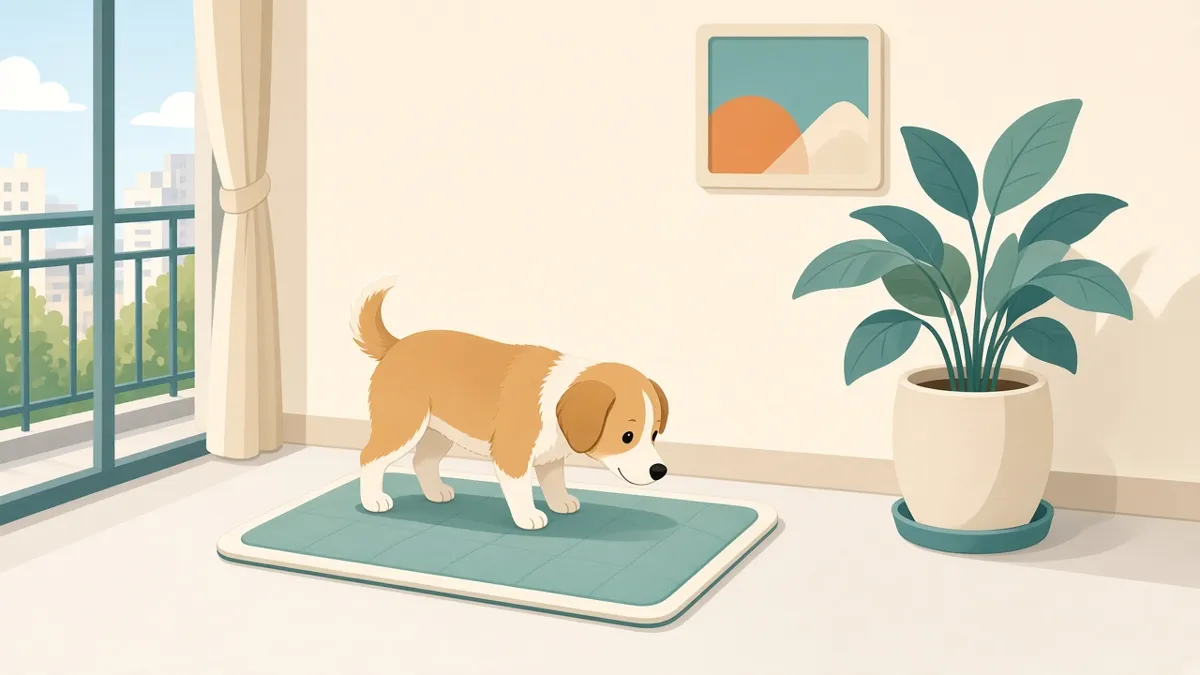
Disposable pads are the cheapest way to start and the easiest to throw away. Reusable pads cost more up front but suit a long-term indoor or balcony set-up. Whichever you choose, keep the spot consistent and use it as a stepping stone, not a replacement for outdoor toilet breaks, unless your vet or trainer advises otherwise.
This page contains affiliate links. We earn a commission if you buy through links on this page, at no extra cost to you. As an Amazon Associate I earn from qualifying purchases.
Quick pick
- Easiest first purchase: a large pack of disposable pads (the Amazon Basics pack in the first card below).
- Better value over time: a washable reusable pad (the PIPCO pad in the second card). Buying two lets you rotate one while the other is in the wash.
- Grass trays: a third type, described below. We have not picked one, because we have not checked individual listings closely enough to recommend it.
Comparison: indoor toilet types
This table compares the general types, not individual products. Check size, materials and cleaning notes on any listing before you buy.
| Type | Good for | Watch out for |
|---|---|---|
| Disposable pads | Puppies, short-term use, easy clean-up, travel and trips away | Ongoing cost and rubbish, and some puppies shred them |
| Reusable washable pads | Long-term use, less waste, a neat flat surface for a balcony or laundry | Needs washing, so buy more than one. Follow the care label, because some should not be washed with fabric softener |
| Grass or turf tray | Dogs that like the feel of grass, and owners who want a defined spot with a tray | Needs regular rinsing and replacing, and can smell if it is not cleaned often |
| Real-grass patch | A balcony with space and drainage | Needs watering and replacing, and takes more effort and space |
Simple shortlist
Amazon Basics Dog and Puppy Pee Pads, Regular (Pack of 100)
A large pack of disposable training pads with a leak-proof, quick-dry design, in a regular size.
Caveat: The listing describes standard absorbency in a regular size, which suits small dogs and puppies but may be too small for a larger dog. Check the size and absorbency on the Amazon page against your dog.
PIPCO PETS Washable Reusable Puppy Pee Pad (45 x 60 cm)
A washable, reusable pad in a size that suits a puppy or small dog. A reusable pad avoids the cost of repeatedly buying disposables.
Caveat: Check the listing for the colour and size variant you want, the care instructions and whether a second pad is sold separately. You will need to wash and dry it regularly.
Pros and cons of an indoor toilet spot
Pros
- Handy in a unit with no yard, or when it is too hot, cold or wet to go out
- Helps a young puppy that cannot hold on yet
- Useful for small senior dogs and for dogs recovering from illness, on a vet's advice
- Easy to set up on a balcony, in a laundry or in a bathroom
Cons
- Some puppies get confused about the difference between inside and outside
- Pads can be chewed, shredded or ignored
- Reusable pads need regular washing, and any pad that is not cleaned promptly can smell
- It is not a substitute for regular outdoor walks and toilet breaks
How to set it up
- Pick one spot and keep it there. A laundry, bathroom or a balcony corner away from food and bedding works well. Moving it around makes training harder.
- Start small and cover the area. Use enough pads to cover the area when your puppy is learning, then reduce the area gradually as they get the idea.
- Take your puppy to the spot at predictable times. After waking, after meals and after play are common times. Praise calmly when they use it.
- Clean accidents promptly with a pet-safe cleaner so the smell does not draw your puppy back to the wrong place.
- Keep the sleeping area separate. See our crate guide and bed guide for setting up a rest area.
Common mistakes
- Using a pad that is too small for the dog, so they miss it.
- Using a tray with no raised edge, so urine runs off onto the floor.
- Washing reusable pads with fabric softener, which can reduce how well they work, so follow the care label.
- Changing the spot, the surface and the routine all at once.
- Telling off a puppy after an accident. Calm, consistent routines are more helpful.
Frequently asked questions
Will an indoor toilet confuse my puppy about going outside?
It can for some puppies. Keep outdoor toilet breaks in the routine where you can, and ask your vet or a trainer about how to move from pads to outdoors. This guide is general information, not training or veterinary advice.
How many pads do I need?
That depends on your dog's size, age and routine. With reusable pads, having at least two lets you rotate one while the other is being washed. With disposables, a large pack keeps you from running out in the first weeks.
When should I speak to a vet?
If your dog suddenly has more accidents than usual, strains, or has changes in urine or stools, talk to your vet.
How we choose
For this guide we compared the main indoor toilet types by how they work in an apartment, and looked at the size, material and cleaning information on the two Amazon listings we link. We have not tested these products ourselves, and we do not make claims about how well any pad performs. Check the details on each Amazon page before you buy.
This guide is research-based. We have not hands-on tested these products. We compare manufacturer and listing specifications and general guidance, and any pros, cons and picks are the Small Paw Guide editorial team's own assessment, not test results. We do not show prices or customer feedback, so check the current listing before you buy. See how we work and our affiliate disclosure. The review date for this guide is shown under its title.
Final thought
Start with whichever type is easiest for you to keep up, keep the spot and the routine consistent, and treat it as one part of toilet training rather than the whole plan.
Keep reading
- Puppy Essentials Checklist Australia: What to Buy First: Where toilet-training gear fits in the first-week shopping list.
- Best Dog Crates for Small Dogs in Australian Apartments: Setting up a crate and a toilet area in a small space.
- Best Dog Beds for Small Dogs in Australia: Keeping the sleeping area separate from the toilet area.
- Best Calming Products for Anxious Dogs: Fireworks Night Plan: Settling a nervous puppy during toilet training.
- Best Puppy Playpens for Small Dogs in Australia: Setting up pads at one end of a puppy playpen.
More in this topic: gear and setup guides, or browse all guides.